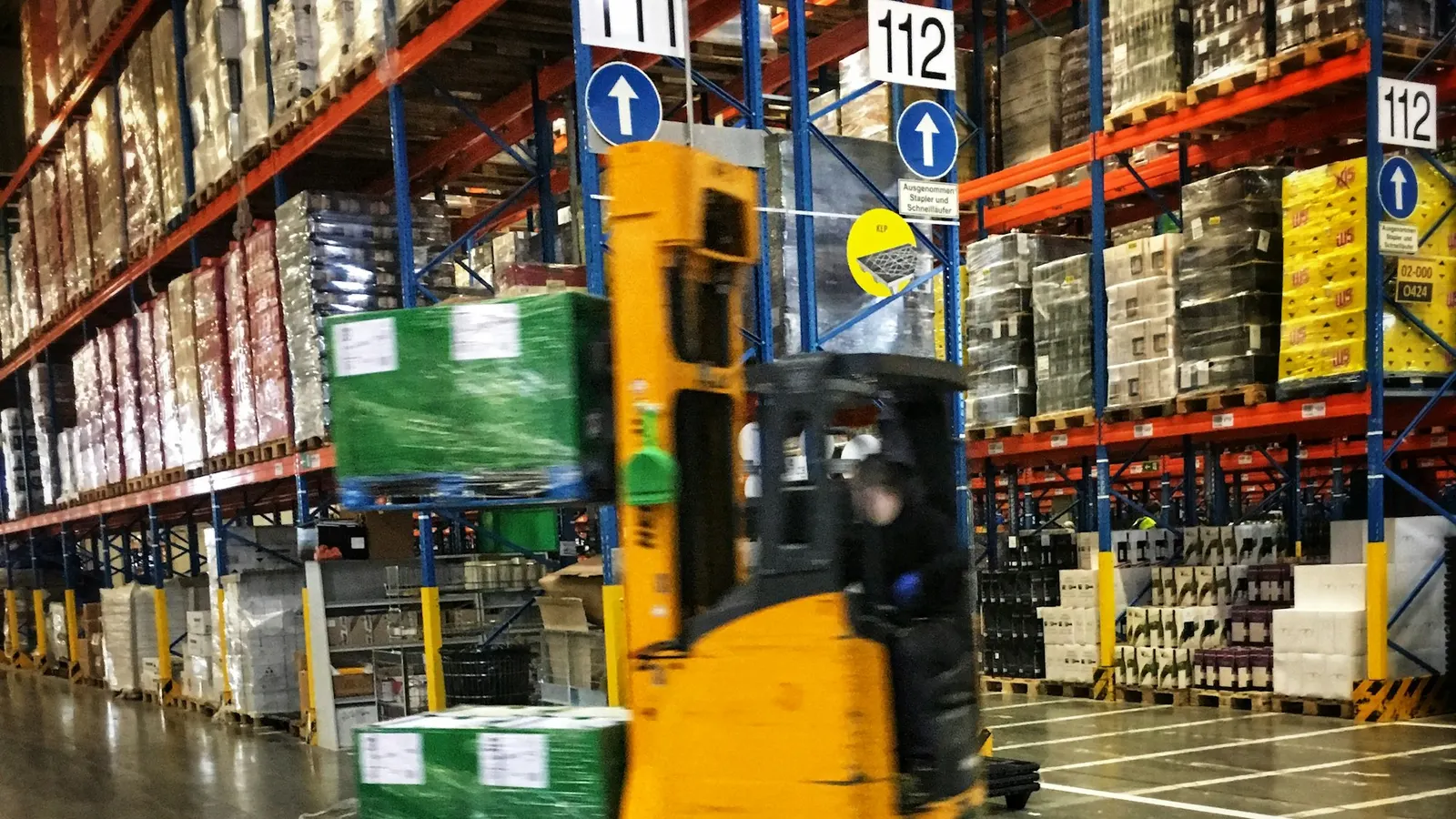
What it takes to build freight management software that handles carrier integration, load tracking, and rate management at real operational scale.
Freight Management Software Development
Direct answer: Freight management software development builds the systems that plan, book, track, and settle freight shipments across carriers — typically a transportation management system (TMS) core integrated with carrier APIs and EDI transaction sets for load tenders, tracking updates, and invoicing.
Freight operations run on a mix of relationships and data feeds that don't always agree with each other: a carrier's own tracking portal, an EDI feed from a broker, a driver's phone GPS, and a dispatcher's own judgment about which carrier will actually show up on time. Software built for this world has to reconcile those sources into one operational picture, not just provide a pretty dashboard on top of a single clean data source. Operations directors and CTOs evaluating a build usually already know their off-the-shelf TMS is either too rigid for their carrier mix or too generic for their specific freight type — the question is what a custom or heavily-configured build actually needs to include.
The Buyer Problem: Managing Shipments and Carriers at Scale
Most companies reach this decision point one of two ways: they're running freight operations through spreadsheets, email, and phone calls that no longer scale past a certain shipment volume, or they've outgrown a generic off-the-shelf TMS that can't flex to their specific carrier relationships, freight types, or customer-facing tracking requirements. In both cases, the underlying problem is the same — visibility and control across a fragmented set of carriers, each with different technical capabilities, different data formats, and different reliability.
This is the kind of build our custom software development team scopes through a discovery-first process before writing code, because the right architecture depends entirely on the specific carrier relationships involved. A shipper working with fifteen regional carriers, three national LTL (less-than-truckload) providers, and a handful of owner-operators needs one system that can tender loads, track status, and settle invoices across all of them — without requiring every carrier to support the same integration method. That's the core engineering challenge: building an abstraction layer that treats "get me the current status of this load" as one consistent internal operation, regardless of whether the answer comes from a modern REST API, an EDI 214 message, or a phone call logged manually by a dispatcher.
This matters more as freight volume grows, because the operational cost of fragmentation compounds. A dispatcher checking three different carrier portals to piece together the status of ten loads is a tolerable inefficiency at low volume; at higher volume it becomes the single largest drag on team throughput, and it's usually the actual trigger that pushes a company from "we'll manage with spreadsheets" to "we need a real system."
Carrier API Integration: The Real Engineering Problem
Carrier integration maturity varies enormously. Some carriers offer modern REST APIs with real-time tracking webhooks; many mid-size and regional carriers still rely on EDI, and a meaningful share of smaller carriers have no programmatic interface at all. A production freight management system needs to handle all three tiers gracefully:
- Modern API carriers — real-time load tendering, status webhooks, and rate quoting through REST or GraphQL interfaces, ideally normalized behind an internal adapter layer so the rest of the system doesn't need carrier-specific logic scattered throughout. Our third-party API integration guide covers the general adapter pattern this relies on.
- EDI-based carriers — structured message exchange using standard transaction sets: 204 (load tender), 214 (shipment status update), 210 (freight invoice), 990 (load tender response/acceptance), and 997 (functional acknowledgment confirming a message was received and parseable). A freight system needs an EDI translation layer that converts these into the same internal load and status model the API-based carriers use.
- Manual-update carriers — a dispatcher-facing interface for logging status updates from phone calls or emails, feeding into the same underlying data model so customer-facing tracking doesn't have visible gaps depending on which carrier is hauling a given load.
The design principle that matters most here: the internal data model for a "load" and its status history should be identical regardless of which integration tier supplied the update. Get this wrong and you end up with three parallel systems wearing one UI.
Load Tracking: Real-Time Visibility Without Fragile Dependencies
Customer-facing load tracking is one of the most visible features of any freight system, and it's also one of the easiest to build in a way that looks good in a demo and breaks in production. Real considerations:
- Multiple GPS/telematics sources — ELD (electronic logging device) data, carrier-provided GPS feeds, and driver mobile apps all need to feed into one location picture, with clear rules for which source takes precedence when they disagree.
- Graceful degradation — when real-time location isn't available (a carrier without ELD integration, a dead zone), the system should fall back to milestone-based tracking (picked up, in transit, out for delivery) rather than showing a stale or broken map.
- Exception alerting — automated flags for loads running behind schedule, sitting at a facility longer than expected, or missing expected check-in windows, so dispatchers spend their attention on exceptions rather than watching every load manually.
- Customer-facing status pages — shippers increasingly expect their own customers to get tracking links, which means the tracking data model needs a public-safe view that doesn't leak internal rate or carrier-relationship data.
Rate Management: Where Freight Software Pays for Itself
Rate management is frequently underbuilt in custom freight systems because it looks simpler than it is. A real rate management module needs to handle:
- Contract rates — negotiated rates by carrier, lane, and equipment type, with effective date ranges and the ability to model rate changes without disrupting active shipments.
- Spot market quoting — for lanes without contract coverage, integration with spot rate sources or a structured RFQ (request for quote) workflow across multiple carriers.
- Accessorial charges — detention, layover, liftgate, and other add-on charges that are a common source of invoice disputes if not modeled explicitly and tied to the specific load event that triggered them.
- Freight audit and invoice matching — reconciling carrier invoices (often received as EDI 210 transactions) against the original rate agreement and actual shipment data, flagging discrepancies before payment rather than after.
This is where a well-built system directly protects margin — freight invoice errors and undetected accessorial overcharges are a real, recurring cost for shippers without automated audit matching.
EDI Error Handling and Data Consistency
EDI integration introduces failure modes that don't exist with modern REST APIs, and a freight system that doesn't handle them explicitly will silently lose or duplicate data. A few patterns matter in particular:
- Acknowledgment tracking. Every inbound EDI message should generate (or expect) a 997 functional acknowledgment confirming it was received and syntactically valid. A system that doesn't track 997s separately from business-level responses (like a 990 tender acceptance) can't distinguish "the carrier never got our tender" from "the carrier got it and hasn't responded yet" — two very different operational problems that need different follow-up actions.
- Idempotent message processing. EDI feeds occasionally redeliver messages, whether due to a VAN (value-added network) retry or a carrier's own system reprocessing a batch. Status updates need to be processed idempotently — a duplicate 214 update shouldn't create a second status history entry or trigger a duplicate customer notification.
- Reconciliation against expected state. When a load's status doesn't progress as expected (no pickup confirmation within the expected window, no delivery update after the estimated transit time), the system should flag it for dispatcher review rather than silently waiting indefinitely.
- Format and mapping drift. Carriers occasionally change their EDI implementation without much notice — a field that used to carry a standard code starts carrying free text, for instance. Build a validation layer that flags unexpected data shapes rather than accepting anything without complaint and corrupting downstream reporting.
Data consistency issues in freight systems are rarely dramatic; they're small, silent gaps that compound into real customer-facing failures — a load reported as delivered when it wasn't, or a duplicate invoice generated from a redelivered EDI 210. The engineering discipline here is closer to what's described in our data migration strategy for legacy software piece — validate at every boundary, and treat unexpected data as a flag for review, not a silent pass-through.
Dispatcher Experience and Exception Management
The dispatcher-facing side of a freight system is where operational value is actually realized day to day, and it's frequently underinvested relative to the customer-facing tracking experience. A strong dispatcher interface prioritizes:
- Exception-first views — surfacing loads that are late, missing expected updates, or flagged by an automated rule, rather than requiring dispatchers to scan every active load manually.
- Fast carrier communication logging — a lightweight way to log a phone call outcome (new ETA, delay reason) without leaving the load record, since this manual-update path is often the highest-friction part of a dispatcher's day.
- Lane and carrier performance visibility — on-time percentage and tender acceptance rate by carrier, which directly informs which carriers get first-look at future loads.
- Bulk actions — the ability to re-tender a batch of loads to a backup carrier when a primary carrier declines or fails, without re-entering each load manually.
Getting this experience right has a direct, measurable effect on dispatcher throughput — the same principle covered in our custom dashboard development piece, where the design goal is reducing time-to-decision for the person using the tool all day, not maximizing the number of data points shown on screen.
Feature Comparison: Generic TMS vs. Purpose-Built Freight Management
| Capability | Generic off-the-shelf TMS | Purpose-built custom system |
|---|---|---|
| Carrier integration flexibility | Limited to pre-built connectors; gaps for regional/owner-operator carriers | Built around your actual carrier mix, including manual-update workflows |
| EDI transaction support | Often limited to major sets; smaller carriers may be unsupported | Full EDI 204/214/210/990/997 support scoped to your carrier relationships |
| Rate management depth | Basic contract rate storage | Full accessorial modeling, spot quoting, and freight audit matching |
| Customer-facing tracking | Generic tracking page, hard to customize | Branded tracking experience tied to your customer relationships |
| Customization cost over time | License and configuration fees scale with complexity | One-time build cost, full control over roadmap |
Integration Considerations Beyond Carriers
Freight management software rarely lives in isolation — it typically needs to integrate with:
- Warehouse management systems (WMS) for pickup and delivery coordination at owned or third-party facilities.
- ERP systems for order-to-cash workflows, since freight cost is a real line item that needs to hit the general ledger correctly — see our manufacturing ERP integration piece for the broader integration patterns (API-based, middleware, and batch sync) that apply here too.
- Customer order management systems, so shipment creation can be triggered automatically from an order rather than requiring manual re-entry.
- Accounting/AP systems, for freight invoice payment once audit matching clears an invoice.
Companies running both freight management and field-dispatched delivery or installation teams should also look at how these systems interact with mobile field operations — our field service management software development piece covers the dispatch and real-time location tracking patterns that overlap meaningfully with freight tracking.
Build vs. Buy vs. Configure
| Approach | Best fit | Trade-off |
|---|---|---|
| Off-the-shelf TMS | Standard truckload/LTL operations with common carrier relationships | Limited flexibility for non-standard carrier mix or unique rate structures |
| Heavily configured TMS platform | Mid-size operations needing moderate customization | Configuration limits eventually hit a ceiling; vendor lock-in risk |
| Fully custom build | Complex, multi-modal, or carrier-mix-heavy operations where off-the-shelf flexibility runs out | Higher upfront investment; requires a partner who understands EDI and carrier integration patterns |
Our general build-vs-buy framework applies directly here — the deciding factor is usually how non-standard your carrier mix and rate structures are relative to what a packaged platform assumes.
What to Ask a Development Partner
- Have you built EDI integration before, and which transaction sets (204, 214, 210, 990, 997) have you implemented?
- How do you handle carriers with no programmatic interface at all — is there a manual-update path that feeds the same data model?
- What's your approach to reconciling GPS/telematics data from multiple sources into one location picture?
- How does your rate management design handle accessorial charges and freight audit matching?
- What's your experience integrating freight systems with WMS or ERP platforms?
- How do you structure the system so adding a new carrier integration doesn't require touching core logic?
- What does your first release scope look like for a freight management build?
What a Strong First Release Looks Like
A disciplined first release typically covers load tendering and tracking for your highest-volume carrier tier first — usually the API-capable carriers — with a functional manual-update path for the rest, rather than attempting full EDI integration across every carrier relationship on day one. Rate management often ships in a second phase once the tracking and tendering core is stable, since audit matching depends on having reliable shipment data to reconcile against. Customer-facing tracking pages are worth including early, since they're highly visible and directly affect customer relationships.
Pricing
| Tier | Price | Typical scope |
|---|---|---|
| Essential | $1,000 | A focused carrier integration or tracking module connected to an existing TMS |
| Growth | $2,000 | Load tendering, tracking, and basic rate management for a defined carrier set |
| Enterprise | $4,000+ | Full freight management platform with multi-tier carrier integration, EDI, and freight audit matching — scope quoted after discovery |
See our full pricing breakdown and methodology for how a freight management engagement moves from discovery to launch. Our industries page also outlines the other verticals we build for, in case your operation spans logistics and manufacturing or field service simultaneously.
Frequently Asked Questions
Do we need to support all five common EDI transaction sets from day one? No — most freight management builds start with the transaction sets your actual carrier mix uses most (often 204 and 214), adding 210, 990, and 997 support as carrier relationships and invoice audit needs demand it.
Can a custom system integrate with carriers that have no API or EDI capability? Yes — this requires a manual-update interface for dispatchers, feeding the same internal load and status data model so tracking gaps aren't visible to customers regardless of carrier integration tier.
How long does a first release typically take? For a first release covering tendering and tracking with your top carrier tier, three to five months from discovery through go-live is a realistic range, depending on integration complexity.
Is freight audit and invoice matching worth building in the first release? Usually not — it's more valuable once there's reliable shipment and rate data to reconcile against, so it's commonly a second-phase investment after the tracking and tendering core is stable.
How does this differ from a generic logistics software build? Freight management is narrower — focused specifically on carrier relationships, load tendering, and transportation execution — while broader logistics software may also cover warehousing and inventory. See our logistics software development company piece for the wider view.
Do small carriers really still rely on EDI or phone calls? Yes — EDI remains common among regional and mid-size carriers, and a meaningful share of small carriers and owner-operators have no programmatic interface at all, which is why the manual-update path matters.
Should customer-facing tracking be built in the first release? It's often worth prioritizing early since it's highly visible to your customers and directly affects satisfaction, even if the underlying carrier integration coverage is still incomplete.
What's the most common reason freight management projects run over budget? Underestimating the number of distinct carrier integration methods needed and treating EDI translation as a minor task rather than a real engineering workstream.
How do we handle a carrier that changes their EDI format without notice? Build a validation layer at the EDI ingestion boundary that flags unexpected field values or formats for review rather than silently accepting them — this is the single most effective safeguard against quiet data corruption from carrier-side changes.
Do we need real-time GPS tracking for every load, or is milestone tracking enough? It depends on customer expectations and freight value — high-value or time-sensitive freight generally justifies real-time tracking investment, while lower-value, standard-transit freight is often adequately served by milestone-based updates (picked up, in transit, delivered).
Key Takeaways
- Freight management software succeeds by normalizing data from API, EDI, and manual-update carrier tiers into one consistent internal load model.
- EDI transaction sets — 204, 214, 210, 990, 997 — remain a core integration requirement for regional and mid-size carrier relationships.
- Load tracking needs graceful degradation to milestone-based updates when real-time GPS data isn't available.
- Rate management, including accessorial charges and freight audit matching, is where the system directly protects margin.
- Build vs. buy depends on how non-standard your carrier mix and rate structures are relative to what off-the-shelf platforms assume.
- A strong first release covers your highest-volume carrier tier first, adding EDI and audit matching in later phases.
- Integration with WMS, ERP, and order management systems is usually necessary, not optional, for a production freight platform.
If you're evaluating a freight management build against your current carrier mix, book a meeting to walk through your integration requirements and realistic first-release scope.