Smart rings have become a genuine three-way market fight between Oura, Samsung, and Ultrahuman as the category expands beyond sleep tracking into payments and AI.
Smart Rings and Health Wearables in 2026
Direct answer: Smart rings have moved from a niche biohacking accessory to a genuine three-way market fight in 2026 between Oura (holding roughly 76.4% share in 2025), Samsung's Galaxy Ring, and Ultrahuman's Ring Air, with new entrants like Pebble, Moto Watch, and Vocci launching across CES 2026. The category is trending now because it's expanding well beyond sleep and recovery tracking into productivity features like meeting transcription, voice notes, gesture control, and fast-growing NFC payment functionality — turning the smart ring from a passive health sensor into an active, multi-purpose wearable.
What's Actually Happening in the Smart Ring Market
For years, the smart ring category was defined almost entirely by one company. Oura built a loyal following among sleep-optimization enthusiasts, biohackers, and increasingly mainstream wellness-conscious consumers with a device that tracked sleep stages, recovery, and readiness through a form factor small enough to forget you were wearing it. That single-company dominance is now facing its first genuine, sustained competitive test. According to GMI Insights' Smart Rings Market Size and Forecasts Report, Oura held approximately 76.4% market share in 2025 — a commanding position, but one increasingly under pressure from two credible challengers: Samsung's Galaxy Ring and Ultrahuman's Ring Air.
What makes 2026 the year this fight becomes genuinely three-way, rather than "Oura plus some smaller alternatives," is the scale and seriousness of the competition now entering the category. Samsung brings its enormous existing Galaxy ecosystem and manufacturing scale to bear on the smart ring form factor, integrating the Galaxy Ring tightly with its broader Galaxy Watch and phone lineup in a way a standalone accessory company like Oura structurally can't replicate. Ultrahuman, meanwhile, has built its reputation specifically around metabolic health and continuous glucose monitoring integration, giving its Ring Air a distinct positioning within the health-tracking space rather than competing purely as a cheaper or feature-equivalent Oura alternative. Counterpoint Research's CES 2026 Wearables Market Overview, subtitled "From One-device Solutions to Specialization," captures the broader shift underlying this fight: the wearables market as a whole is fragmenting into more specialized devices rather than consolidating around one general-purpose gadget, and the three-way smart ring competition is a direct expression of that broader specialization trend.
Layered on top of the established Oura-Samsung-Ultrahuman fight is a wave of genuinely new entrants that launched across CES 2026 specifically — Pebble, Moto Watch, and Vocci among them. Fortune Business Insights' Smart Ring Market Size and Share report and ABI Research's "6 Consumer Technology Trends to Watch in 2H 2026" both point to this influx of new competition as evidence that the category has crossed a threshold where it's now attracting serious investment and product development attention from companies beyond the three established leaders. This matters because a market that can only sustain one or two credible competitors tends to stagnate in terms of feature innovation and pricing competitiveness; a market that can sustain five or more credible entrants — as the smart ring category increasingly can — tends to innovate faster and become more accessible to a broader range of buyers more quickly.
Perhaps the most significant shift, though, isn't about which company is winning, but about what smart rings are actually for. The category's founding value proposition — passive sleep and recovery tracking — remains central, but 2026 is the year smart rings genuinely start doing things beyond quietly measuring biometrics while you sleep. haznos.org's coverage of "10 Wearable Health Tech Trends for 2026" specifically calls out sensors, rings, and continuous monitoring as converging trends, while the productivity-feature expansion — meeting transcription, voice notes, and gesture control — represents smart rings actively participating in a wearer's waking, working life rather than passively observing their sleeping one. Add fast-growing NFC payment functionality to that mix, and the smart ring in 2026 looks meaningfully different from the smart ring of just two or three years ago: less a specialized health sensor, more a general-purpose wearable computing surface that happens to also be excellent at health tracking.
Why It's Trending Now
Three converging forces explain why 2026 specifically is the year the smart ring category shifted from a single-company story to a genuine multi-way market fight with rapidly expanding functionality.
The first is straightforward competitive maturation. Samsung's and Ultrahuman's rings needed several product generations to reach genuine feature and reliability parity with Oura's more established hardware and software platform. Early competitor smart rings often lagged behind Oura specifically on sensor accuracy and battery life — the two attributes that matter most for a device whose entire value proposition rests on trustworthy, continuous, unobtrusive data collection. By 2026, both Samsung and Ultrahuman have had enough product iterations to close much of that gap, which is precisely the condition needed for Oura's 76.4% share to face real, sustained competitive pressure rather than sporadic challenges from underbaked alternatives.
The second is the broader wearables market's structural shift toward specialization, as captured directly in Counterpoint Research's CES 2026 framing of a move "from one-device solutions to specialization." For years, the dominant wearable narrative was the smartwatch, positioned as a single device meant to do everything — fitness tracking, notifications, payments, health monitoring, communication — on your wrist. That everything-device model is giving way to a more specialized ecosystem where different wearables handle different jobs particularly well: a smart ring for continuous, unobtrusive biometric tracking that doesn't require charging every night or interrupting sleep; a smartwatch for richer display-based interaction and fitness-specific features; potentially smart glasses or hearables for other specialized functions. ABI Research's framing of rings as "complementary to smartwatches rather than competitors" reflects this specialization thesis directly — the smart ring isn't trying to replace the smartwatch, it's carving out the specific niche it's best suited for and expanding within that niche.
The third force is the genuine expansion of what a ring-form-factor device can plausibly do, driven by continued miniaturization of sensors, batteries, and increasingly capable low-power processors. A ring has always been a more constrained design space than a watch or a phone — there's simply less physical volume available for components — which historically limited rings to relatively passive sensing functions. As component miniaturization continues to advance, features that would have been physically impossible to fit into a ring form factor a few years ago — NFC payment chips, voice-capture microphones sensitive enough for meeting transcription, gesture-recognition sensors — have become genuinely achievable, which is exactly why 2026 is seeing this wave of productivity and payment features arrive in the category more or less simultaneously across multiple competitors rather than as a single company's isolated innovation.
Who This Affects and the Business Stakes
The smart ring fight matters to a broader set of stakeholders than health-and-fitness enthusiasts deciding which device to strap — or slip — on next.
For consumers, the stakes are largely about which company's platform and philosophy best matches their actual health and lifestyle priorities, now that there's genuine choice rather than a single dominant option. Someone whose primary interest is sleep optimization and recovery tracking may still find Oura's mature, purpose-built platform the strongest fit, particularly given its established 76.4% share reflecting years of platform refinement. Someone already deep in the Samsung Galaxy ecosystem — phone, watch, tablet — may find the Galaxy Ring's tight integration with devices they already own more valuable than marginal differences in sensor accuracy. Someone specifically focused on metabolic health, glucose response, and broader biomarker tracking may find Ultrahuman's Ring Air, with its metabolic-health-forward positioning, the better fit regardless of Oura's larger installed base. This is a meaningfully healthier situation for consumers than a near-monopoly market, since genuine competition tends to produce faster feature improvement and more competitive pricing than a single dominant player operating without serious rivals.
For employers and workplace technology teams, the productivity-feature expansion described above — meeting transcription, voice notes, gesture control — raises smart rings from a purely personal wellness device to something with plausible workplace deployment implications, echoing the broader "digital coworker" and workplace-AI-tooling trends reshaping how work gets done. A wearable that can quietly capture meeting notes or transcribe a conversation without requiring a phone or laptop to be actively running represents a genuinely different interaction model than existing meeting-transcription software, and it raises the same category of data-governance and privacy questions that any new always-on sensing device introduces into a workplace — questions that get more urgent, not less, as NFC payment functionality means the same device can also handle financial transactions.
For device manufacturers themselves, the competitive stakes are considerable given how fast the underlying market is reported to be growing. CAGR figures cited across GMI Insights' and Fortune Business Insights' market forecasts point to sustained double-digit growth expected through the early 2030s, meaning today's competitive positioning — Oura's 76.4% share, Samsung's ecosystem-integration bet, Ultrahuman's metabolic-health specialization, and the CES 2026 wave of new entrants like Pebble, Moto Watch, and Vocci — is likely to compound into meaningfully different market outcomes several years from now depending on which company executes best on sensor accuracy, battery life, and the emerging productivity and payment feature set in the next couple of product cycles.
The Global Picture
The smart ring story, like many fast-moving consumer hardware trends, is unevenly documented across regions in the research available, and it's worth being direct about where solid reporting exists and where it doesn't.
The United States is described in the underlying research as the primary competitive battleground for this fight — the market where Oura Ring 5, Samsung's Galaxy Ring, and Ultrahuman's Ring Air are, in the research's own framing, fighting for "the same market" most directly. This makes sense given that all three companies maintain their most extensive retail presence, marketing investment, and platform integration depth in the US market, and it's consistent with the US generally serving as the proving ground for premium wearable technology trends before they scale globally.
The UK presents a more limited picture: a Wareable review of the best smart rings for the UK market was identified during this research but could not be accessed for regional pricing detail, as the page returned an access error when fetched. This is worth noting honestly rather than glossing over — there is UK-specific coverage of this category that exists but wasn't successfully retrieved in this research pass, so UK-specific pricing and availability detail should be treated as a genuine information gap rather than evidence that the UK market lacks meaningful smart ring activity.
UAE and Dubai show no distinct regional-specific reporting found in this research pass. Given the UAE's well-established appetite for premium wearable and health-tech products more broadly, it's reasonable to expect meaningful smart ring interest in the region, but the sources grounding this piece don't provide region-specific detail to confirm that with precision.
Australia similarly shows no distinct regional-specific reporting found in this research pass. As with the UAE, this reflects a gap in the available research rather than an indication that the Australian market is uninvolved in this global product category shift.
Germany also shows no distinct regional-specific reporting in this research pass, and it's worth being candid that the sources reviewed here simply don't surface German-market-specific commentary on smart ring competition or adoption.
Europe and France offer slightly more concrete detail than the other gap regions, though still not France-specific: CES 2026 new entrants, including the Moto Watch priced at $116, were confirmed launching across "Europe, Middle East, Africa, Latin America, Asia-Pacific, and North America" as a combined rollout region, per the underlying research. This confirms that at least some of the CES 2026 wave of new smart ring and wearable competitors is reaching European markets as part of a global launch strategy, even without France-specific pricing, retail, or adoption detail available in this particular research pass.
China shows no distinct regional-specific reporting on smart rings in this research pass — worth noting specifically because the broader China wearables research conducted for this piece centered on smart glasses rather than rings, suggesting that within China's wearable technology conversation, smart glasses may currently be commanding more attention and coverage than the ring form factor specifically. That's a meaningful contrast with the US market's ring-centric framing, and it's a reasonable signal that different regions may be prioritizing different wearable form factors as their leading edge of innovation and adoption, even within the same broader "wearable health tech" category.
Beyond Sleep Tracking: The Productivity and Payments Expansion
It's worth spending real time on the feature expansion described briefly above, because it represents the most structurally interesting shift in the smart ring category for 2026 — arguably more consequential long-term than the specific competitive rankings between Oura, Samsung, and Ultrahuman.
For most of the smart ring's history, its core job was singular and passive: collect biometric data continuously and unobtrusively, then present that data back to the wearer through a companion app, typically framed around sleep quality, recovery readiness, and activity levels. This is genuinely valuable — continuous, ring-form-factor tracking avoids the compliance problem that plagues many health-tracking devices, where people simply stop wearing a bulkier device like a chest strap or even a smartwatch consistently enough to generate useful longitudinal data. A ring, by contrast, is small and comfortable enough that many wearers report forgetting it's there, which is precisely what makes its passive sensing valuable: it captures real, continuous data rather than data from the subset of days someone remembered and bothered to strap on a bulkier device.
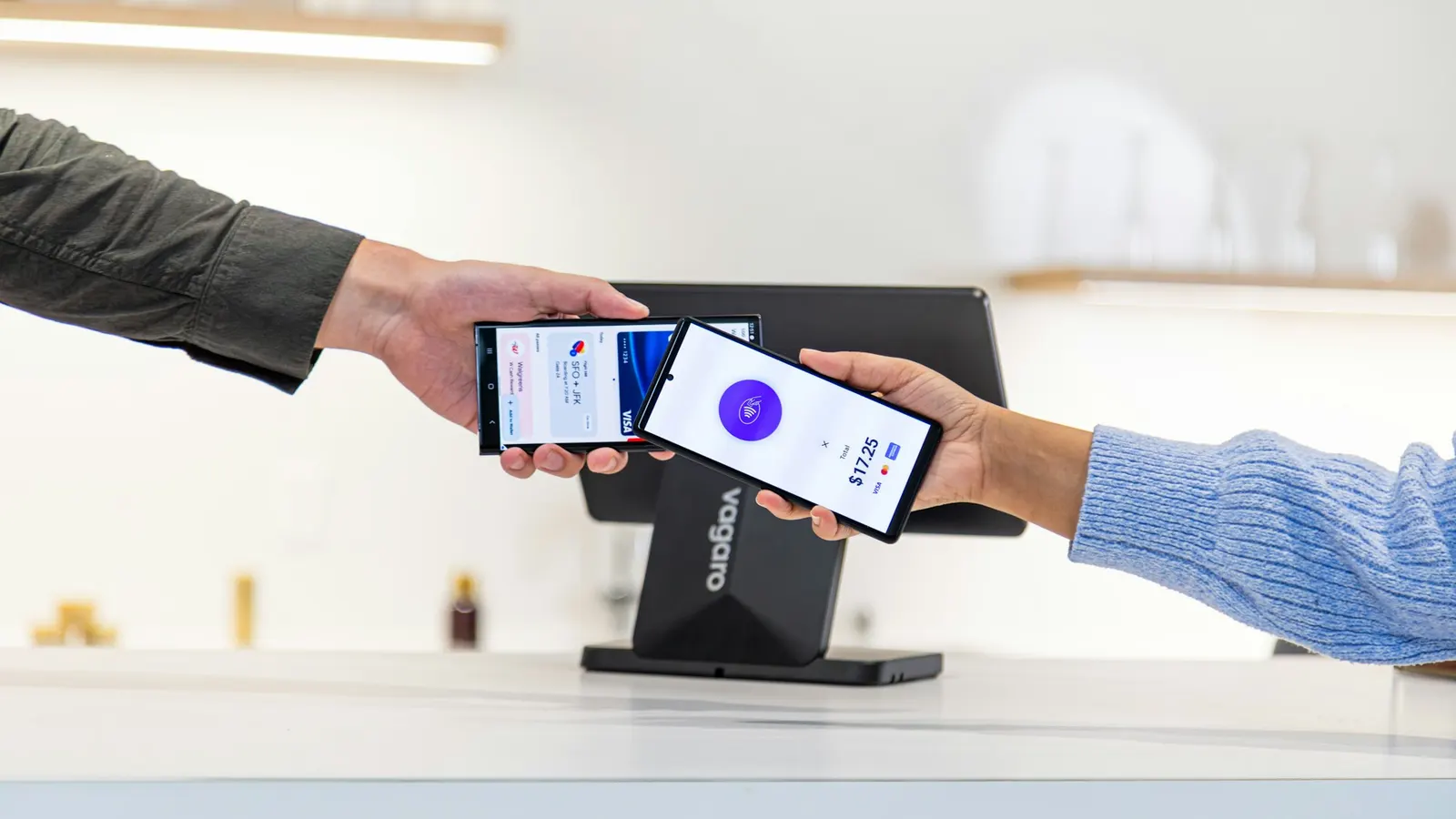
What's changing in 2026 is that this passive sensing foundation is being layered with active, in-the-moment functionality. Meeting transcription and voice notes represent the ring moving from a device that watches you sleep to a device that participates in your working day — capable of capturing a conversation or a quick spoken thought without requiring a phone to be actively recording or a laptop to be open and running transcription software. Gesture control extends this further, turning the ring into an input device rather than purely a sensor, letting a wearer control other connected devices — a phone, a presentation, a smart-home system — through hand movements rather than touch or voice commands. And NFC payment functionality, described in the underlying research as a fast-growing segment specifically, turns the ring into a financial instrument, letting a wearer tap to pay for a purchase without pulling out a phone or physical card at all.
Taken together, these additions mark a genuine identity shift for the category. A device that was, for years, understood almost entirely through a health-and-wellness lens is becoming something closer to a general-purpose wearable computing accessory that happens to have exceptional health-sensing capability as its foundation. This is a meaningfully different value proposition to market and sell, and it's likely part of why CES 2026 saw such a notable wave of new entrants — Pebble, Moto Watch, Vocci — rather than the category remaining a contest purely between the three established health-focused leaders. A ring that can transcribe meetings, control gestures, and process payments appeals to a genuinely broader buyer base than a ring that only tracks sleep, which expands the addressable market in a way that likely explains at least part of the acceleration in new competitive entries this year.
This expansion also raises the stakes on questions that a purely passive health-tracking device didn't need to answer as urgently — particularly around data security and access control, given that a device now capable of both health monitoring and financial transactions represents a considerably more attractive target for security compromise than a device that only logs sleep stages. Companies and individual buyers alike should expect security and privacy questions to become a more central part of smart ring purchasing decisions going forward, not a secondary consideration behind sensor accuracy and battery life the way it may have been in the category's earlier, purely health-focused years.
Data Privacy and Security as Rings Get More Active
As smart rings take on more active functionality, the data privacy and security stakes attached to the category rise correspondingly, and it's worth walking through why this matters more in 2026 than it did when the category's job was purely passive health sensing.
A device that only tracks sleep stages and recovery metrics collects sensitive data, certainly — health information is among the most personal categories of data any device can gather — but the practical risk profile of a compromised sleep-tracking dataset is different in kind from the risk profile of a compromised device that can also process financial payments, capture spoken conversations through meeting transcription, and interpret hand gestures to control other connected devices. Each new active capability described above — NFC payments, voice capture, gesture control — expands what a compromised ring, a compromised companion app, or a compromised cloud account tied to that ring could actually be used for by a bad actor. A stolen sleep dataset is a privacy violation; a compromised device with active payment capability and always-listening voice capture is a meaningfully more serious security exposure.
This is precisely why the shift the smart ring category is undergoing in 2026 — from passive health sensor to active, multi-purpose wearable computing accessory — deserves more security scrutiny than the category has historically received as a purely health-focused product. Health-and-wellness wearables have generally been evaluated by consumers and reviewers primarily on sensor accuracy, comfort, and battery life, with security treated as a secondary consideration behind those more visible, more immediately felt attributes. A ring that can also authorize a payment or capture a confidential business conversation changes that calculus. Buyers, and especially any organization considering these devices in a workplace context given the meeting-transcription and voice-note functionality described earlier, should increasingly weigh each manufacturer's security architecture — how data is encrypted in transit and at rest, what access controls exist around the companion app and any connected payment functionality, and how quickly the manufacturer has historically responded to disclosed vulnerabilities — as seriously as they weigh sensor accuracy and battery life.
There's also a genuinely important distinction worth drawing between on-device processing and cloud-dependent processing for these newer active features. Voice capture and transcription functionality, in particular, can be implemented in meaningfully different ways from a privacy standpoint: some approaches process captured audio locally on the device or on a paired phone before any data leaves the user's control, while others depend on sending raw audio to a manufacturer's cloud infrastructure for processing, which introduces additional data-handling and retention questions a buyer or an IT team evaluating workplace deployment should want clear, specific answers to before allowing a device with this capability into meetings involving sensitive or confidential material. The underlying research grounding this piece doesn't detail which specific approach each 2026 smart ring manufacturer uses for its meeting-transcription and voice-note features, which is itself a useful reminder that this is exactly the kind of question a prospective buyer — particularly an enterprise buyer — should be asking manufacturers directly rather than assuming a particular privacy-protective architecture by default.
None of this is meant to suggest smart rings are unusually risky compared to other connected devices already common in daily life — smartphones, smartwatches, and laptops all carry comparable or greater data exposure surfaces, and none of that has stopped their widespread, generally safe adoption. The point is narrower and more practical: as the smart ring category's functional scope expands rapidly in 2026, the due-diligence questions a thoughtful buyer or IT decision-maker should be asking about these devices need to expand at the same pace, rather than remaining anchored to the simpler, purely-health-focused questions that were sufficient when a ring's only job was tracking how well you slept.
It's also worth situating the smart ring's rise within the broader wearable category it sits alongside rather than treating it in isolation. Hearables — earbuds and other in-ear devices increasingly equipped with their own biometric sensors, translation features, and voice-assistant integration — are undergoing a parallel expansion in functional scope for many of the same underlying reasons: component miniaturization making richer functionality physically possible in a small form factor, and manufacturers racing to differentiate within an increasingly specialized wearables market rather than competing purely on a single "everything device" like a smartwatch. A consumer or an organization building a wearable strategy in 2026 is realistically choosing not between a single device and no device, but between an expanding menu of specialized wearables — rings, watches, hearables, and potentially smart glasses — each contributing a different slice of continuous data and a different interaction surface. Understanding the smart ring specifically within that broader, increasingly crowded wearable ecosystem, rather than as a standalone product category, gives a more accurate picture of where consumer attention, manufacturer investment, and eventually enterprise deployment decisions are likely headed over the next several years.
What This Means Going Forward
The overall picture heading through 2026 is a smart ring market that has decisively moved past single-company dominance into genuine, multi-front competition, expanding its functional scope well beyond its original sleep-and-recovery-tracking foundation. A few practical implications follow from the evidence above.
First, Oura's 76.4% 2025 share should be read as a strong starting position facing real erosion pressure rather than an unassailable lead. With Samsung bringing ecosystem-integration advantages Oura structurally can't match, and Ultrahuman carving out a distinct metabolic-health specialization, plus a wave of new CES 2026 entrants adding further competitive pressure from below on price and novel features, the multi-way fight described throughout this piece is likely to produce meaningfully different share dynamics over the next few product cycles than the near-monopoly Oura has enjoyed to date. Buyers benefit from this competitive pressure regardless of which company ultimately wins the largest share, since genuine competition tends to accelerate feature development and improve pricing across the category as a whole.
Second, the productivity and payments feature expansion is likely to accelerate rather than plateau, given how many separate companies are now investing in this direction simultaneously — meeting transcription, voice notes, gesture control, and NFC payments aren't isolated bets by a single manufacturer but a pattern showing up across multiple competitors at once. Businesses and individual buyers evaluating smart rings should increasingly expect to compare them not just on sleep and recovery tracking accuracy but on this broader functional set, much the way smartphone buyers compare cameras, battery life, and software ecosystem rather than any single specification in isolation.
Third, for organizations thinking about how to build products, services, or workplace tools that interact with this expanding category of always-on, increasingly capable wearables, the shift from passive sensor to active computing accessory is a meaningful design and engineering consideration. A wearable capable of gesture control, voice capture, and payments represents a genuinely different integration surface than a device that simply syncs sleep data to an app once a day, and building thoughtfully for that reality — rather than treating smart ring integration as an afterthought — is exactly the kind of forward-looking product work that benefits from dedicated mobile app development and UI/UX design and branding expertise, particularly for teams whose existing products weren't originally designed with continuous, wearable-sourced data or wearable-initiated interactions in mind. Reviewing how comparable hardware-driven product shifts have been navigated elsewhere is a reasonable next step before committing engineering resources to this area; Scult's case studies and glossary resources are useful starting points for grounding those decisions.
Fourth, and finally, it's worth keeping the competitive picture itself in perspective as it continues to evolve. A market this young, growing this fast, and this recently opened up to serious multi-company competition rarely stays static for long — the specific rankings and feature gaps described throughout this piece reflect where things stand as of 2026, not a settled long-term outcome. Oura's current lead, Samsung's ecosystem bet, Ultrahuman's metabolic-health specialization, and the CES 2026 wave of new entrants are all still actively jockeying for position in a category that's simultaneously expanding its core functionality and its total addressable buyer base at the same time. Anyone making a purchasing decision, a product-integration decision, or a workplace-deployment decision around smart rings in 2026 should treat today's competitive snapshot as exactly that — a snapshot — and expect the specific leaders, features, and price points to keep shifting meaningfully over the next several product cycles.
Questions People Are Actually Asking About Smart Rings and Wearable Health Tech
Which smart ring is best in 2026 — Oura or the alternatives?
There's no single universally "best" smart ring in 2026 — the right choice depends on individual priorities, and Wareable's ongoing testing of the best smart rings frames the decision as Oura versus a genuinely credible set of top alternatives rather than Oura versus lesser competitors. Oura remains the most established platform, holding roughly 76.4% market share in 2025, and is generally the strongest choice for buyers prioritizing mature, purpose-built sleep and recovery tracking. Samsung's Galaxy Ring is the stronger pick for anyone already invested in the Galaxy ecosystem, given its tight integration with Galaxy phones and watches. Ultrahuman's Ring Air stands out specifically for buyers focused on metabolic health tracking. Newer 2026 entrants like Pebble and Vocci offer lower price points and novel features like extensive language support, appealing to buyers prioritizing budget or specific new functionality over platform maturity.
What wearable health tech trends matter most in 2026 — sensors, rings, continuous monitoring?
According to haznos.org's coverage of the ten wearable health tech trends shaping 2026, sensors, rings, and continuous monitoring represent a converging set of priorities rather than separate trends — the underlying shift is toward increasingly sophisticated, increasingly miniaturized sensors enabling genuinely continuous rather than spot-check health monitoring, with the ring form factor emerging as a particularly effective delivery mechanism for that continuous sensing because it's comfortable and unobtrusive enough that people actually wear it consistently. This continuity matters more than raw sensor sophistication in many cases, since even a highly accurate sensor produces limited value if worn inconsistently. The smart ring category's growth is best understood as one visible expression of this broader continuous-monitoring trend, alongside parallel developments in other wearable form factors and increasingly capable at-home health sensing more generally.
How is the wearables market shifting from one-device solutions to specialization at CES 2026?
Counterpoint Research's CES 2026 Wearables Market Overview frames this shift directly: rather than a single "everything device" like a smartwatch trying to handle every wearable function, the market is increasingly organizing around specialized devices that each do a narrower set of jobs particularly well. Smart rings represent one clear expression of this specialization, positioned as excellent at continuous, unobtrusive biometric tracking in a way a smartwatch — bulkier, requiring more frequent charging, more disruptive to sleep if worn overnight — structurally can't match. ABI Research's framing of rings as "complementary to smartwatches rather than competitors" reinforces this specialization thesis: rather than one wearable winning at the expense of others, the 2026 wearables market is fragmenting into a portfolio of devices, each occupying the niche it's best suited for, with many consumers plausibly owning both a ring and a watch rather than choosing one over the other.
How much does the Oura Ring 5 cost in 2026?
Specific 2026 pricing for the Oura Ring 5 wasn't detailed in the research grounding this piece, though Oura has historically positioned its rings at a premium price point relative to newer, lower-cost entrants like the CES 2026 Pebble and Vocci devices, consistent with its position as the category's most established platform with the deepest software and data-analysis maturity behind its hardware. Oura has also historically required an ongoing subscription for full access to its health insights beyond the initial hardware purchase, which is an important additional cost factor buyers should weigh alongside the ring's upfront price. Buyers comparing cost across the category should look at total cost of ownership — hardware price plus any required subscription — rather than upfront price alone, since subscription requirements vary meaningfully between Oura, Samsung's Galaxy Ring, and Ultrahuman's Ring Air.
Is the Samsung Galaxy Ring or the Oura Ring better for sleep tracking?
Both devices offer genuinely capable sleep tracking, and specific head-to-head sleep-accuracy benchmarks weren't detailed in the research grounding this piece, but the two platforms differ meaningfully in surrounding context. Oura, with its 76.4% 2025 market share and years of platform refinement focused specifically on sleep and recovery, generally offers the more mature, purpose-built sleep analysis experience with deeper historical trend data and insight generation. Samsung's Galaxy Ring offers the advantage of tight integration with the broader Galaxy ecosystem, meaning sleep data can combine more seamlessly with data from a Galaxy Watch or phone-based tracking for a more unified health picture, if a buyer already owns those other Samsung devices. For a buyer with no existing ecosystem loyalty whose primary interest is sleep tracking specifically, Oura's platform maturity is generally considered the stronger standalone choice; for a Galaxy ecosystem owner, the integration advantage may outweigh marginal sleep-tracking differences.
Does the Ultrahuman Ring Air require a subscription like Oura does?
Subscription requirements vary across the smart ring category, and Ultrahuman has historically positioned itself with a different subscription model than Oura's ongoing-fee approach, though specific current 2026 subscription terms for the Ring Air weren't detailed in the research grounding this piece. This recurring-cost question is a genuinely important comparison point for buyers evaluating smart rings, since the total cost of ownership over a device's multi-year lifespan can differ substantially between a one-time hardware purchase and a hardware-plus-ongoing-subscription model. Buyers should verify each company's current subscription terms directly before purchasing, since pricing models in this fast-moving competitive category are subject to change as companies like Ultrahuman, Samsung, and the CES 2026 new entrants compete more directly for the same buyers Oura has traditionally served under its subscription approach.
Can a smart ring replace a smartwatch in 2026?
Generally, no — and this isn't really how the category is positioning itself. ABI Research specifically frames smart rings as "complementary to smartwatches rather than competitors," reflecting the broader wearables-market shift toward specialization described in Counterpoint Research's CES 2026 coverage. A smart ring excels at continuous, unobtrusive biometric sensing — sleep, recovery, heart rate — precisely because it's small and comfortable enough to wear constantly, including overnight, without disrupting sleep the way a bulkier smartwatch might. A smartwatch, by contrast, offers a display, richer real-time interaction, and typically broader app and notification support that a ring's minimal form factor can't replicate. Most buyers interested in both continuous health tracking and richer on-wrist interaction are likely better served owning both devices, using each for the specific job it does best, rather than expecting either one to fully replace the other.
How accurate are smart rings for heart-rate and sleep-stage tracking?
Specific comparative accuracy benchmarks across Oura, Samsung's Galaxy Ring, and Ultrahuman's Ring Air weren't detailed in the research grounding this piece, though sensor accuracy has generally improved across the category as competition has intensified and each company has iterated through multiple product generations. Smart rings generally benefit from a stable, consistent sensor position against the finger, which can support reliable heart-rate and sleep-stage detection compared to wrist-worn devices that can shift position during sleep. As with any health-tracking device, accuracy can vary by individual physiology, ring fit, and specific activity or sleep condition, so buyers with specific accuracy requirements — particularly for any medical or clinical-adjacent use case — should review current independent accuracy testing for the specific device under consideration rather than relying on manufacturer marketing claims alone.
What is the Pebble Round 2, and when does it ship?
The Pebble Round 2 is confirmed to ship in May 2026, positioning it as one of the notable CES 2026 smart ring and wearable launches entering the increasingly crowded competitive field alongside established players like Oura, Samsung's Galaxy Ring, and Ultrahuman's Ring Air. Specific detailed feature and pricing information for the Pebble Round 2 wasn't fully detailed in the research grounding this piece beyond its confirmed shipment timing, but its emergence as part of the broader CES 2026 wave of new entrants — alongside devices like the Moto Watch and Vocci AI Ring — reflects the smart ring category's growing appeal to a wider range of manufacturers beyond the three established health-focused leaders, as the category's functional scope expands beyond pure health tracking into productivity and other features.
Can smart rings make contactless payments now?
Yes — NFC payment functionality is described in the underlying research as a fast-growing segment within the smart ring category specifically, allowing wearers to tap their ring to pay for purchases without needing to retrieve a phone or physical card. This represents a meaningful expansion of what smart rings are used for, moving the category beyond its original passive health-tracking foundation into active, transactional functionality. Not every smart ring on the market supports NFC payments, so buyers specifically interested in this feature should confirm current payment capability for the exact model under consideration rather than assuming it's universal across the category. The growth of payment functionality also raises the stakes on security considerations for smart rings generally, since a device capable of financial transactions represents a more attractive target for compromise than a purely health-tracking accessory.
What is the Vocci AI Ring and what languages does it support?
The Vocci AI Ring is confirmed to support 112 languages, positioning it distinctly within the CES 2026 wave of new smart ring entrants around extensive multilingual capability, likely tied to its AI-driven features such as voice capture, transcription, or translation-adjacent functionality. This level of language support is notable within the smart ring category specifically, since most established competitors like Oura, Samsung's Galaxy Ring, and Ultrahuman's Ring Air have historically focused their feature development on health and biometric tracking rather than language processing breadth. The Vocci AI Ring's positioning suggests it may be targeting a somewhat different buyer than the established health-tracking-first players — one prioritizing the productivity and communication-assistance side of the category's broader 2026 feature expansion, including meeting transcription and voice notes, over pure biometric sensing depth.
Do smart rings work for meeting transcription and voice notes?
Increasingly, yes — meeting transcription and voice notes represent part of the broader 2026 productivity-feature expansion happening across the smart ring category, alongside gesture control and NFC payments, as devices move beyond their original passive health-sensing purpose. This functionality typically relies on the ring's microphone capturing audio directly, which is then processed either on-device or via a connected companion app, without necessarily requiring a phone to be actively recording or a laptop with transcription software open. Not every smart ring on the market currently supports this feature, and capability likely varies significantly by manufacturer and specific model, so buyers specifically interested in transcription functionality should verify current support directly rather than assuming it's standard across the category. This feature set is one of the clearest signals that smart rings are evolving from purely a health-and-wellness accessory toward a more general-purpose wearable computing device.
Which smart ring has the best battery life in 2026?
A definitive, single "best battery life" ranking across all 2026 smart rings wasn't specified in the research grounding this piece, though battery life has historically been one of the more significant differentiating factors within the category, given the extremely limited internal volume available in a ring form factor compared to a smartwatch. Rings adding more active functionality — NFC payments, voice capture for transcription, gesture control — face a genuine engineering trade-off between richer feature sets and battery longevity, since each additional active feature typically draws more power than the category's original passive sensing functions. Buyers prioritizing maximum battery life above other considerations should compare current published battery specifications and independent real-world testing across specific models directly, and should be aware that a ring loaded with the newer productivity and payment features may trade off some battery longevity relative to a more sensing-focused competitor.
Are smart rings waterproof enough for swimming?
Water resistance varies by specific model and manufacturer, and detailed swimming-specific waterproofing comparisons across Oura, Samsung's Galaxy Ring, and Ultrahuman's Ring Air weren't specified in the research grounding this piece. Generally, the ring form factor lends itself well to strong water resistance compared to devices with displays, buttons, or more complex housings, since a smooth, sealed ring body has fewer potential points of water ingress. That said, "water resistant enough for showering and hand-washing" and "rated for sustained swimming" are meaningfully different durability standards, and buyers specifically planning to wear their smart ring while swimming should check the exact official water-resistance rating for their chosen model rather than assuming general water resistance implies swim-readiness.
How do I choose the right smart ring size?
Sizing is a genuinely important and somewhat category-specific consideration for smart rings, since an ill-fitting ring can both compromise sensor accuracy — most smart ring sensors rely on close, consistent skin contact — and simply be uncomfortable to wear continuously. Most major smart ring manufacturers, including Oura, Samsung, and Ultrahuman, offer sizing kits that let buyers try on non-functional sample rings in various sizes before committing to a purchase, which is generally the most reliable way to determine correct fit given how much finger size can vary from a standard ring-sizing chart, particularly accounting for daily fluctuations in finger swelling. Buyers should request a sizing kit rather than guessing based on existing jewelry ring size alone, since smart rings tend to have a slightly different fit profile than traditional jewelry due to their internal sensor and battery components.
Is a smart ring worth it if I already own a fitness smartwatch?
Potentially yes, depending on what gaps exist in your current tracking. Given ABI Research's framing of smart rings as complementary to smartwatches rather than competitors, many buyers get genuine additional value from owning both — using the ring specifically for continuous overnight sleep tracking a smartwatch might disrupt or fail to capture as comfortably, while keeping the smartwatch for richer daytime interaction, notifications, and display-based features. The decision comes down to whether your current smartwatch experience has specific gaps a ring would fill, most commonly around overnight wearability and sleep-tracking comfort, or whether you're satisfied with your existing device's health-tracking depth and don't need a second wearable. For buyers whose smartwatch already delivers satisfactory sleep and recovery data, an additional smart ring may offer more redundancy than new value.
What's the cheapest smart ring available in 2026?
Among the CES 2026 new entrants, Motorola's Moto Watch is confirmed at $116, positioning it as one of the more budget-accessible options within the broader 2026 wearable landscape, alongside other new lower-cost entrants like Pebble and Vocci that are generally reported to be targeting more budget-conscious buyers than the established Oura, Samsung Galaxy Ring, and Ultrahuman Ring Air lineup. Established category leaders have historically positioned themselves at a higher price point, reflecting their platform maturity and, in some cases, required ongoing subscriptions for full feature access. Buyers prioritizing the lowest possible entry cost should specifically compare the CES 2026 wave of new entrants, while being aware that lower price often comes with less mature software platforms and shorter track records for sensor accuracy and long-term reliability compared to the established leaders.
Can smart rings detect gestures to control your phone?
Yes — gesture control is part of the broader 2026 feature expansion happening across the smart ring category, turning the device from a purely passive sensor into an active input mechanism capable of controlling connected devices like a phone, presentation software, or smart-home system through hand movements rather than touch or voice commands. This functionality typically relies on motion sensors within the ring detecting specific hand and finger gestures, which are then interpreted by a companion app to trigger corresponding actions on a connected device. Not every smart ring supports gesture control currently, and the sophistication of gesture recognition likely varies significantly between manufacturers, so buyers specifically interested in this feature should verify current capability for their model of interest. This functionality represents one of the clearest examples of the category's broader shift from passive health sensor toward active, general-purpose wearable computing accessory.
How does Oura maintain over 76% smart-ring market share against Samsung and Ultrahuman?
Oura's roughly 76.4% 2025 market share, per GMI Insights' research, reflects years of first-mover advantage and sustained platform refinement specifically focused on sleep and recovery tracking, giving it deeper historical data, more mature insight-generation algorithms, and stronger brand recognition within the smart ring category than newer competitors have yet been able to match. That said, this dominant position is explicitly framed throughout current 2026 coverage as facing genuine competitive pressure rather than being unassailable — Samsung's ecosystem-integration advantages and Ultrahuman's metabolic-health specialization, plus the wave of CES 2026 new entrants, represent real threats to Oura's share going forward. Maintaining this level of dominance over the next few years will likely require Oura to continue innovating on the productivity and payment features driving the category's broader 2026 expansion, rather than relying solely on its established sleep-and-recovery-tracking strength.
Do smart rings need to be recharged daily?
No — one of the smart ring category's core advantages over bulkier wearables like smartwatches is generally longer battery life measured in days rather than requiring daily recharging, which is part of what makes continuous, uninterrupted overnight sleep tracking practical in the first place. Specific battery life figures vary by manufacturer and model, and rings with more active features — NFC payments, voice capture, gesture control — may see somewhat reduced battery life compared to more purely sensing-focused competitors, given the additional power draw those features require. Buyers should check current published battery life specifications for their specific model of interest, but as a general category characteristic, smart rings are designed around multi-day battery life specifically to support the continuous wear that makes their core sleep and recovery tracking value proposition work.
What's the difference between the Ultrahuman Ring Air and earlier Ultrahuman generations?
Specific generation-over-generation feature comparisons for Ultrahuman's ring lineup weren't detailed in the research grounding this piece, though the Ring Air represents Ultrahuman's current-generation flagship smart ring as of 2026, competing directly against Oura and Samsung's Galaxy Ring within the category's three-way market fight. Ultrahuman has consistently positioned its ring lineup around metabolic health specialization, including integration with continuous glucose monitoring, distinguishing it from Oura's and Samsung's broader general wellness and recovery-focused positioning. Buyers specifically interested in generational improvements — sensor accuracy, battery life, feature additions — should check Ultrahuman's official current product comparison directly, since the smart ring category overall has been iterating quickly given the intensity of the current three-way competitive fight.
Are smart rings safe to wear all day, every day?
Generally, yes — smart rings are specifically designed for continuous, all-day and overnight wear, since that continuous wear is central to their core value proposition of capturing genuinely continuous rather than spot-check biometric data. The devices use low-power sensors and are built from materials generally considered safe for prolonged skin contact, similar in principle to how traditional jewelry is designed for continuous wear, though smart rings incorporate additional electronic components. As with any device worn continuously against skin, individual sensitivity or allergic reactions to specific materials are possible for some wearers, and buyers with known metal or material sensitivities should check the specific materials used in their ring of interest before purchasing. Beyond individual material sensitivity considerations, there's no indication in current research that continuous smart ring wear poses meaningful health risks for the general population.
Can smart rings track menstrual cycles and fertility?
Menstrual cycle and fertility-related tracking has been a feature area within the broader smart ring and wearable health-tech category, generally derived from a combination of temperature sensing and other biometric signals the ring collects continuously overnight, though specific 2026 feature comparisons across Oura, Samsung's Galaxy Ring, and Ultrahuman's Ring Air on this specific capability weren't detailed in the research grounding this piece. This kind of tracking is a natural extension of the sleep-and-recovery-focused continuous sensing that defines the category's core value proposition, since overnight temperature patterns are a well-established biological signal relevant to cycle tracking. Buyers specifically interested in this functionality should verify current feature support and accuracy claims directly with each manufacturer, since capability and depth of cycle-tracking features can vary meaningfully across the category's competitors.
How fast is the smart ring market expected to grow through 2030?
The smart ring market is projected for sustained strong growth through the early 2030s, based on CAGR figures cited across GMI Insights' and Fortune Business Insights' market research reports, both explicitly covering forecast periods extending toward 2030 and beyond (GMI's report spans 2026-2035, Fortune Business Insights' spans 2026-2034). While the specific precise growth percentage wasn't detailed in the research grounding this piece, the existence of two independent market research firms publishing multi-year forecast reports specifically for this category signals genuine confidence in sustained, significant expansion, consistent with the broader three-way competitive intensification and wave of new CES 2026 entrants described throughout this piece. This growth trajectory reflects both continued adoption among existing health-and-wellness-focused buyers and the category's expanding appeal driven by new productivity and payment features reaching a broader buyer base.
What's the return policy if a smart ring doesn't fit?
Specific return policy details vary by manufacturer and retailer, and weren't detailed in the research grounding this piece, but most major smart ring companies — including Oura, Samsung, and Ultrahuman — generally offer sizing kits specifically to reduce the likelihood of a fit-related return, letting buyers verify their correct size with a non-functional sample ring before purchasing the actual device. Given how central proper fit is to both comfort and sensor accuracy for this category, requesting and using a sizing kit before ordering is strongly advisable regardless of a specific manufacturer's return policy generosity. Buyers should check the specific return window and any restocking fees for their chosen manufacturer and retailer directly before purchasing, since these terms can vary meaningfully and change over time as competition in the category intensifies.
Does a smart ring work with both iPhone and Android?
Most major smart rings, including Oura, Ultrahuman's Ring Air, and generally most CES 2026 new entrants, are designed to work with both iOS and Android through their respective companion apps, reflecting the category's broad general-consumer positioning rather than platform-exclusive design. Samsung's Galaxy Ring is a notable exception worth flagging specifically: it has historically required deeper integration with the Samsung Galaxy ecosystem, and its full feature set may be more limited or entirely unavailable on non-Samsung Android devices and iPhones, given Samsung's strategic interest in using the ring to strengthen its broader ecosystem lock-in. Buyers using an iPhone or a non-Samsung Android device should specifically verify full cross-platform compatibility for their smart ring of interest before purchasing, particularly if considering the Galaxy Ring, rather than assuming universal compatibility across the entire category.
Which smart ring is best for stress and recovery tracking specifically?
Specific head-to-head stress-and-recovery-tracking comparisons across Oura, Samsung's Galaxy Ring, and Ultrahuman's Ring Air weren't detailed in the research grounding this piece, though recovery tracking has historically been one of Oura's core platform strengths, reflecting years of specific product refinement in this area as part of its broader sleep-and-recovery-focused positioning that helped it build its dominant 76.4% 2025 market share. Ultrahuman's metabolic-health specialization may offer a differently-angled but complementary view of stress and recovery, given the physiological connections between metabolic markers and stress response. Buyers with a specific, primary interest in stress and recovery tracking above other features should compare current independent reviews focused specifically on this capability across the leading platforms, since methodology and depth of recovery-related insights can differ meaningfully even among devices with broadly similar underlying sensor hardware.
Are there smart rings designed specifically for women's sizing and aesthetics?
Some smart ring manufacturers have developed sizing ranges and design aesthetics specifically aimed at broader appeal, including thinner band profiles and expanded small-size availability, addressing a common early-category limitation where initial smart ring designs skewed toward larger, more traditionally masculine sizing and aesthetics. Specific manufacturer-by-manufacturer detail on dedicated women's sizing and design lines wasn't fully specified in the research grounding this piece, but the broader category trend toward increased competition and new CES 2026 entrants has generally pushed manufacturers to expand sizing ranges and design variety to appeal to a wider buyer base. Buyers with specific sizing or aesthetic preferences should check current available sizing ranges and design options directly for each manufacturer of interest, since availability has been expanding as competition in the category intensifies.