How luxury hotel website development should combine booking-engine performance with the visual storytelling that positions a property as premium.
Luxury Hotel Website Development
Direct answer: Luxury hotel website development has to do two things at once that most hotel websites treat as separate problems: tell a visual story convincing enough to justify a premium rate, and convert that impression into a completed direct booking before the guest opens Booking.com or a similar OTA out of habit. A website that nails the visual storytelling but has a clunky booking engine loses the guest at the exact moment of commitment. A website with a fast booking flow but generic photography never creates the desire to book in the first place. Luxury hotel website development means solving both, together, not sequentially.
A luxury property's guest has already decided to spend more for a better experience — the website's job is to make the case for why this specific property earns that spend, and then make booking directly the obviously easier choice compared to a familiar OTA app. For GMs and marketing directors running upscale properties across the UAE and wider Gulf market, where guest sourcing is genuinely international and competition against branded hotel groups with deep marketing budgets is constant, the website is frequently the first real impression a prospective guest forms of the property — before a single photo of the actual room gets viewed on Instagram, before a travel advisor even gets consulted. This piece covers what a serious luxury hotel website build requires, what it costs, and where most properties leave direct-booking revenue on the table.
What is luxury hotel website development?
It's the process of building a hotel website specifically engineered for a premium guest: large-format, professionally shot photography and video that carries the property's visual identity, a booking engine fast enough and trustworthy enough to compete with a guest's default instinct to book through a familiar OTA, and content that communicates the specific experience — the view, the service level, the design — that justifies the rate. It differs from standard hotel web development mainly in what has to be true of the presentation layer: generic stock-photo templates and dense, brochure-style copy actively undercut a luxury positioning, even when the actual property delivers on the experience.
The technical requirements don't disappear at the luxury end — a luxury hotel website still needs a working PMS-connected booking engine, mobile responsiveness, and fast load times — but the design bar is meaningfully higher, because the guest evaluating a five-figure suite stay is implicitly comparing the website against other luxury brands' sites, private aviation booking portals, and high-end retail experiences, not against a budget-chain competitor.
How much does a luxury hotel website cost to build?
| Tier | Price | What it typically covers |
|---|---|---|
| Essential | $1,000 | A polished, media-rich marketing site connected to your existing booking engine's API, with a mobile-optimized booking flow and clean rate/availability display. |
| Growth | $2,000 | Custom visual storytelling — bespoke photography and video integration, immersive property and suite pages, and a direct-booking incentive layer (rate advantage or perk messaging) built into the booking flow itself. |
| Enterprise | $4,000+ | Fully custom booking engine UX distinct from every other property using the same white-label engine, multi-property architecture for hotel groups, and deep guest CRM/loyalty integration tied to marketing automation. |
The variable that drives cost most isn't page count — luxury hotel websites are usually not large sites — it's how much of the booking engine experience is custom versus a themed instance of a shared, white-label booking widget. A property happy with a well-designed booking widget embedded cleanly can stay in the Essential-to-Growth range. A property that wants a booking flow indistinguishable in quality from the surrounding brand experience — custom upsell logic, a fully bespoke visual language through checkout — moves into Enterprise territory. Our pricing page breaks this down further, and our cost of custom software development piece covers cost variables that apply regardless of industry.
How long does it take to build a luxury hotel website?
An Essential-tier site with a connected booking engine typically takes 5-8 weeks, most of it spent on photography curation, copy, and content rather than development itself. A Growth-tier build with custom visual storytelling and a bespoke booking-flow layer typically runs 10-14 weeks — the incremental time goes into design iteration on property and suite pages, which matters disproportionately at the luxury end. Enterprise-tier, multi-property builds with fully custom booking engines commonly run 4-6 months.
The most common source of delay isn't development — it's photography and video production. A luxury hotel website built around mediocre or outdated photography undermines the entire premise of the project, and re-shooting a property properly (with the right season, light, and staging) can add weeks to the timeline on its own. Building photography and video production into the project plan from day one, rather than treating it as an afterthought once development is underway, is the single most effective way to keep a luxury hotel website build on schedule.
What features should a luxury hotel website include?
- Large-format, high-resolution photography and video that loads fast despite the file sizes involved — responsive image serving matters enormously here
- A direct-booking engine connected live to the PMS, with real-time rate and availability accuracy
- Immersive individual pages per suite/room category, not a single generic "rooms" page listing every type identically
- A clear, visible incentive to book direct — a rate advantage, complimentary upgrade, or a perk unavailable through OTAs
- Mobile-first booking flow — a large share of luxury travel research and booking now happens on mobile even for high-value stays
- Guest CRM integration for returning-guest recognition and personalized offers
- Multi-language and multi-currency support for an internationally sourced guest base
- Fast page load despite heavy media — the single most common technical failure point on luxury hospitality sites
- Concierge-style content (dining, spa, experiences) that reinforces the property's positioning beyond just the room product
- SSL, accessibility basics, and clean structured data so search engines and AI answer engines represent the property accurately
Visual Storytelling and Brand Positioning
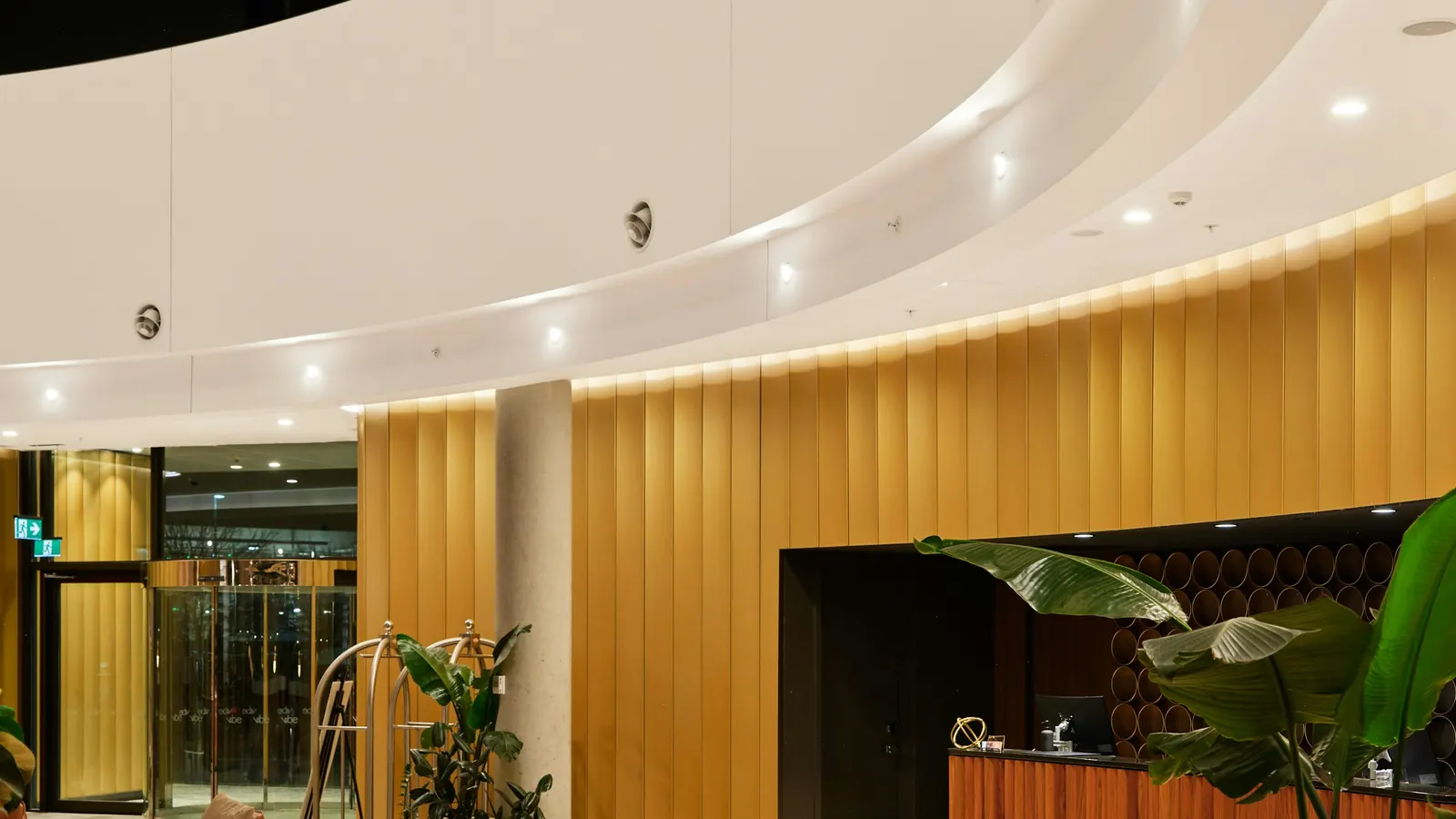
At the luxury end, the website's visual language does work that copy alone can't. A guest deciding between a $600-a-night room and a $1,200-a-night suite is often making that decision on the strength of how convincingly the photography and video communicate the difference — the view, the space, the finish, the service moments captured in a candid rather than staged way. This is where UI/UX design work becomes inseparable from the photography itself: a beautifully shot gallery presented in a cramped, generic template still undersells the property, and a well-designed template with mediocre photography has nothing to showcase.
Consistency matters as much as quality — the visual language across the homepage, individual suite pages, dining and spa content, and the booking flow itself needs to read as one coherent brand experience, not a marketing site bolted onto a generic third-party booking widget with a different visual style. Guests notice this discontinuity even when they can't name it, and it quietly erodes the trust the rest of the site worked to build.
Mobile Booking Conversion and Reducing OTA Dependency
Mobile is where the direct-versus-OTA decision is actually made for most luxury guests today, which makes mobile booking-flow quality a commercial priority, not a technical afterthought. A desktop-optimized site with a mobile experience that's merely "responsive" rather than genuinely designed for a phone loses guests at exactly the moment they're comparing your rate against the OTA app already installed on their device. Mobile app development is worth considering for hotel groups with enough repeat-guest volume to justify a dedicated app — mobile check-in, digital keys, and in-stay concierge requests — though for most single-property luxury hotels, a genuinely excellent mobile web booking flow delivers most of the same conversion benefit at lower cost.
Reducing dependency on OTA commissions — typically 15-20% per booking — is the underlying business case for all of this. The practical levers are consistent: a visible direct-booking incentive, a faster and more trustworthy booking flow than the OTA alternative, loyalty recognition for repeat guests that no OTA can replicate, and retargeting guests who browsed but didn't book, using a CRM and marketing stack the property actually owns rather than data that lives inside an OTA's platform. None of these levers work in isolation — a strong incentive behind a slow, clunky booking flow still loses the guest, and a fast booking flow without a real incentive gives a guest no reason to choose it over a familiar app.
Can a luxury hotel website integrate with a booking engine?
Yes, and this integration is the technical core of the project alongside the visual design. Most luxury properties use an established booking engine (either standalone or bundled with their PMS) that exposes an API or embeddable widget for the direct-booking website to connect to. There are generally two approaches:
- Embedded widget integration — the booking engine vendor's own widget is styled and embedded into the site. Faster and cheaper, but visual and UX customization is limited to what the vendor's widget allows.
- Custom booking-flow integration — the site calls the booking engine's API directly and builds a fully bespoke booking UI on top of it, matching the rest of the site's visual language exactly rather than switching to a visibly different widget mid-flow.
For a luxury property specifically, the jarring visual break between a beautifully designed site and a generic third-party booking widget is a common, avoidable conversion killer — a guest who's been persuaded by the storytelling can lose confidence at the exact moment they hit a booking flow that suddenly looks like every other hotel's website. Confirm what level of customization your specific booking-engine vendor's API actually allows before committing to a design that assumes full visual control.
The engineering work behind this integration is closer to custom software development than standard web development — matching a booking engine's API to a fully bespoke visual layer, handling rate-plan and package complexity correctly, and keeping the checkout flow reliable under real booking volume all require more than templating skills. A vendor proposing to handle this as a pure design exercise, without a clear plan for the API integration itself, is underscoping the harder half of the project.
How do you choose a company to build a luxury hotel website?
Questions worth asking any vendor directly:
- Can you show a past luxury hospitality project where the booking flow matches the rest of the site's visual design, rather than switching to a generic third-party widget?
- How do you handle large media files (photography, video) without sacrificing page load speed?
- Which booking engine and PMS platforms have you integrated with, and what level of customization did that allow?
- How do you approach multi-language and multi-currency requirements for an internationally sourced guest base?
- What's your process for guiding photography and content direction, or do you expect us to arrive with finished assets?
A vendor who treats photography and content strategy as part of the project, not someone else's problem handed to them after the fact, is far more likely to deliver a site that actually reflects the property's positioning. Our methodology page explains how we run discovery for projects like this, and our case studies show the level of design and technical detail a genuine luxury hospitality partner should be able to walk you through. For UAE-based properties specifically, our piece on software development in the UAE covers what to evaluate when choosing an India-based or offshore partner, including timezone overlap and delivery model.
What makes a luxury hotel website convert visitors into direct bookings?
- A booking flow that feels as premium as the photography — no jarring drop into a generic third-party widget mid-journey
- A clear, visible reason to book direct — rate advantage, guaranteed upgrade, or a perk the guest can't get through an OTA, stated plainly rather than assumed
- Fast load times on media-heavy pages — every additional second of load time on a luxury property's flagship gallery page measurably increases abandonment
- Personalization for returning guests — a returning guest recognized and welcomed back converts at a meaningfully higher rate than being treated as a stranger every visit
- Trust signals appropriate to the price point — real, current guest reviews, clear cancellation terms, and visible service guarantees that reduce the hesitation a five-figure booking decision naturally carries
Our industries hub covers how this direct-booking conversion logic compares across hospitality sub-segments, and our locations page covers how we handle multi-market SEO and content for properties sourcing guests internationally. Our companion piece on hospitality software development covers the PMS, channel-manager, and CRM integration layer that sits underneath the guest-facing experience described here, and our piece on travel booking app development is relevant if the property is also part of a broader group considering its own multi-property or multi-supplier booking platform beyond a single hotel's direct site.
Is a custom luxury hotel website worth it vs a template?
For a mid-market or budget property, a well-configured hotel website template is often the right call — faster, cheaper, and adequate when the guest isn't making the decision primarily on brand impression. That calculus flips for a genuine luxury property: the guest is explicitly paying a premium partly for a differentiated brand experience, and a visibly templated website — one recognizable as the same theme used by dozens of other properties — actively works against that positioning. The website is one of the few touchpoints a prospective guest experiences before ever setting foot on property, and a generic one undersells everything that happens after check-in.
Our general piece on custom software vs. off-the-shelf covers this build-vs-buy tension outside the hospitality context specifically — the underlying logic (does your positioning depend on genuine differentiation, or is a configured solution genuinely sufficient) applies directly here. Our comparisons hub is worth checking if you're evaluating a handful of specific vendors — including us — head to head rather than deciding the build-vs-buy question in the abstract.
The same brand-differentiation logic shows up across other premium verticals we work with, including real estate website development for high-value brokerages, where a comparably considered, high-ticket buyer decision hinges on the same tension between a fast, templated build and one differentiated enough to justify the price point.
What SEO considerations matter for a luxury hotel website?
- Structured data for hotel and room listings so search engines and AI answer engines can parse rate, amenity, and availability information accurately
- Fast page speed despite heavy media — luxury sites are especially prone to slow load times hurting both rankings and conversion simultaneously
- Destination and experience content — guides to the surrounding area, dining, and experiences build search authority beyond the booking pages themselves and capture guests earlier in their planning process
- Multi-language SEO for properties sourcing guests internationally, with genuinely localized (not machine-translated) content for key source markets
- Review and reputation signals — luxury travelers research heavily before committing, and visible, current reviews across the sites they actually check matter for both trust and search visibility
What are common mistakes luxury hotels make with their website?
- Using stock or dated photography that undercuts a positioning the actual property delivers on in person
- Embedding a generic third-party booking widget that visually breaks the site's premium design at the exact moment of conversion
- Burying the case for booking direct instead of stating a clear, specific incentive
- Slow-loading galleries and video that frustrate exactly the affluent, time-poor guest the site is trying to impress
- Treating the website as a one-time launch project instead of an asset that needs updated photography, content, and booking-flow testing as the property and market evolve
- Underestimating photography and video production time when planning the overall project timeline
Our earlier piece on building a booking-first website for hotels covers several of these same mistakes from a broader hospitality angle, if you're evaluating this alongside a wider portfolio rather than a single flagship property.
Key Takeaways
- Luxury hotel website development succeeds when visual storytelling and booking-engine performance are solved together, not treated as separate projects.
- Pricing scales with how custom the booking-flow experience needs to be, from a $1,000 connected marketing site to $4,000+ fully bespoke, multi-property builds.
- Photography and video production is usually the real timeline driver, not development — plan for it explicitly.
- A jarring visual break between the main site and a generic third-party booking widget is one of the most common, avoidable conversion killers at the luxury end.
- Direct-booking conversion depends on a visible, specific incentive to book direct, not just a nicer-looking site.
- A custom build earns its cost specifically when brand differentiation is part of what the guest is paying for — which is nearly always true at the luxury end.
- SEO and reputation signals matter as much as the booking pages themselves for a guest still deciding where to stay.
If your property's photography deserves better than a generic booking widget bolted onto it, book a free consultation and we'll walk through what a luxury hotel website built around your actual guest and positioning would take to build.